
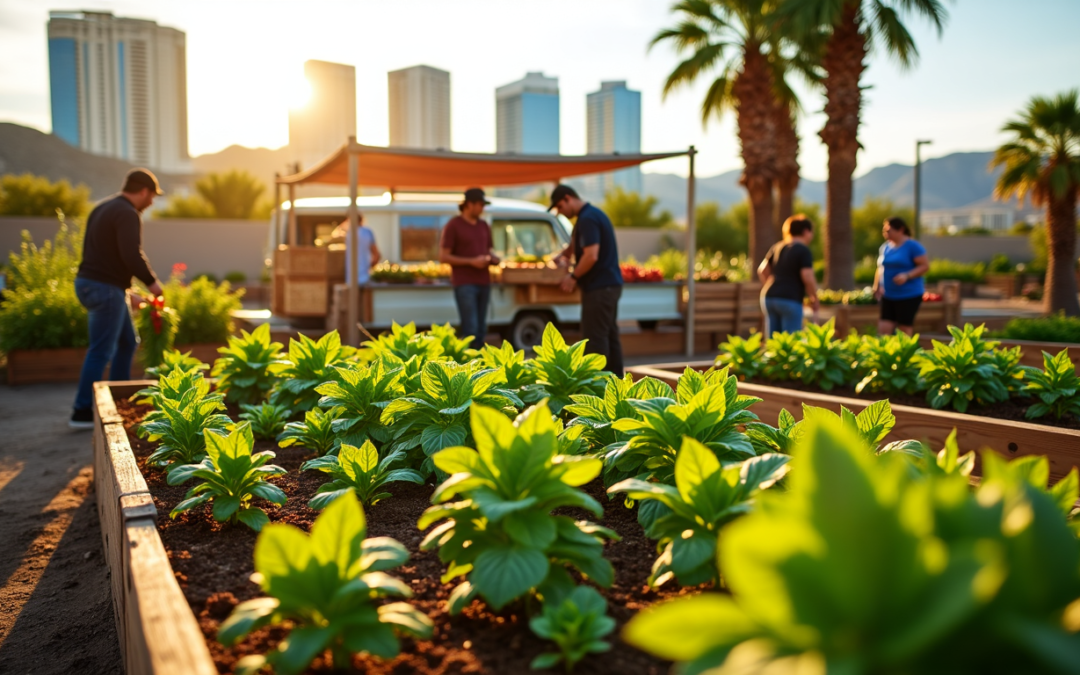
Hunger strikes at the heart of our communities. Food insecurity affects 26.5 million Americans today – the highest level since December 2020. The USDA reports 39.4 million people across our nation lack both income and access to nutritious food.
Dr. Stile and The Frank L. Stile Foundation see hope in local agriculture. Our urban gardens and community farms already provide 15-20% of food supplies, creating real change for families in need. The success shows clearly – during recent challenging times, California’s local farm programs expanded significantly, bringing fresh food directly to neighborhoods.
Local gardens feed our communities. Urban farms nourish our children. Together, we’ll explore how these vital programs create food security and show you practical ways to join our mission. The Frank L. Stile Foundation believes every family deserves access to healthy, fresh food.
Learn More
Food Insecurity Crisis in Las Vegas
The hunger crisis grips our Las Vegas neighborhoods tighter each day. One in seven people (341,480 individuals) struggle to feed their families – 67,050 more than last year. Across Clark, Lincoln, Nye, and Esmeralda counties, food insecurity now touches 14.7% of our neighbors, up from 12%. Most heartbreaking, one in five children (115,520) in Southern Nevada don’t know where their next meal comes from.
Empty Shelves, Empty Tables
Dr. Stile sees the harsh reality of food deserts across Las Vegas. The USDA marks these crisis zones where 20% of families live below poverty level and 33% must travel over half a mile to reach fresh food. Without grocery stores nearby, families turn to convenience stores and fast food – places that rarely stock nutritious options.
The Historic Westside bears the heaviest burden. One quarter of residents there face daily hunger. Our community misses 64 million meals each year – about 188 meals per person. The Frank L. Stile Foundation watches this cycle trap families, especially Black and Latino households, in patterns of poor nutrition.
The Transportation Trap
Empty bus stops mean empty dinner tables. Many Las Vegas families live miles from fresh food sources. One community expert puts it plainly: “You can’t detach food deserts from transportation problems, education gaps, and wealth inequality”.
The weekly food gap hits hard – $24.23 per person across Three Square’s service area, totaling $5,040 yearly for a family of four. The Frank L. Stile Foundation responds by bringing food directly to neighborhoods through mobile markets.
When Every Dollar Counts
Food prices tell a crushing story. After jumping 9.9% in 2022, costs keep climbing – up 5.8% in 2023 with another 2.9% predicted for 2024. Nevada families now spend $295 weekly on groceries, $20 above the national average.
Soaring rents force impossible choices. Many families spend over half their income on housing, leaving little for nutritious meals. The weekly struggle adds up – $24.23 per person across Three Square’s service area.
Working families feel the squeeze most. “Our eating habits will change, what we put on the table, what we make for dinner”. Through our community farms and urban gardens, The Frank L. Stile Foundation creates affordable paths to fresh, healthy food.
Learn More
Community Farms: Growing Hope in Las Vegas
The Frank L. Stile Foundation plants seeds of change across Las Vegas. Our community farms feed neighborhoods, teach farming skills, and bring fresh food where grocery stores can’t reach. Dr. Stile believes every garden grows more than vegetables – it grows hope.
Gardens That Feed Las Vegas
Watch our gardens bloom across the valley. Craig Ranch Park welcomes families to “Pick-It-Yourself” markets and garden classes. Children learn while parents harvest – that’s how we build lasting change.
The Historic Westside’s James Gay Park stands proud, feeding an area where one in four residents experiences food insecurity. Our urban farm there doesn’t just grow food – it grows community.
Learn More
Zion United Methodist Church hosts our crown jewel – the Urban Center for Advanced Agricultural Technologies (UCAAT). Thanks to a $1.5 million HUD grant, desert farming techniques flourish here. Meanwhile, our partnership with Garden Farms of Nevada turns Pumpkin Park into an edible landscape.
Desert-Tough, Desert-Fresh
Las Vegas soil challenges farmers, but Dr. Stile’s gardens prove desert farming works. James Gay Park’s containers burst with:
- Nevada lettuce
- Green beans
- Parsley
- Arugula
- Collard greens
- Fresh herbs
Our desert farming wisdom includes:
- Raised beds that love Las Vegas soil
- Smart growing spaces using just one-seventh of traditional water
- Nature-friendly methods that protect our desert
Drought-hardy pomegranates, quinoa, and special bean varieties thrive in our gardens. Dr. Stile’s innovative approach means less water, more food.
From Our Gardens to Your Table
Fresh food should reach every family. At our Historic Westside farm, community members enjoy discounted produce while SNAP recipients eat free. Three Square Food Bank delivers hot meals to seniors at local libraries, while The Just One Project’s Mobile Market brings groceries straight to neighborhoods.
Our east Las Vegas Solidarity Fridge welcomes neighbors every 20 minutes. Take what you need – that’s our simple rule. We accept SNAP benefits, EBT cards, and Health Bucks, because good food shouldn’t depend on your wallet size.
The Frank L. Stile Foundation builds more than gardens – we build food security. Every seed planted, every meal shared strengthens Las Vegas families.
Learn More
Desert Farming: Dr. Stile’s Proven Methods
Desert soil challenges every farmer. The Frank L. Stile Foundation turns these challenges into opportunities, developing farming techniques perfectly suited to Las Vegas conditions.
Water-Wise Growing
Dr. Stile’s desert farming wisdom starts with water conservation. “Water scarcity defines desert farming,” he explains. “Success means working with nature, not against it.”
Our proven water-saving methods include:
- Drip irrigation systems – Water reaches roots directly, saving 40-60% of water compared to traditional methods
- Smart soil sensors – Real-time moisture monitoring prevents waste
- Strategic mulching – Creates protective soil layers, keeping moisture where plants need it
Dr. Stile’s breakthrough? Liquid natural carbonate technology increases crop yields by up to 30% while using less water. Morning watering schedules – just 30-40 minutes before sunrise – give plants the perfect start.
Raised Beds: Desert Farming’s Secret Weapon
Las Vegas soil fights back – hard, rocky, nutrient-poor. Dr. Stile’s solution? Raised beds that put farmers in control.
“Raised beds let gardeners create the perfect growing environment,” our experts explain. These garden heroes offer:
- Better drainage – No more waterlogged roots
- Smart water use – Every drop counts in focused growing spaces
- Perfect soil mix – 60% topsoil, 30% compost, 10% potting soil
Dr. Stile recommends 10-12 inch depths – giving roots room to thrive. Morning sun placement maximizes growth.
For tough spots? “Adaptive intercropping” pairs drought-tough plants with natural shade. Trees and solar panels become plant partners, protecting tender crops from harsh desert heat.
The Frank L. Stile Foundation proves desert farming works. Every successful harvest brings fresh food to Las Vegas families who need it most.
Learn More
Fresh Food Markets: Bringing Farmers to Families
Dr. Stile believes markets bridge more than business – they connect communities. The Frank L. Stile Foundation watches these gathering places grow into lifelines for Las Vegas families seeking fresh, affordable food.
Market Days Across Las Vegas
Fresh food finds a home valley-wide. Downtown Summerlin welcomes shoppers every Saturday at The Pavilion (9 AM – 2 PM). European breads, seasonal fruits, and local vegetables fill market stalls. The District at Green Valley Ranch opens Thursday mornings – 9 AM to 1 PM spring/summer, 10 AM to 2 PM fall/winter.
Visit our partner markets:
- Fresh 52 at Bruce Trent Park (Wednesdays, 2-8 PM)
- Prevail Marketplace at Montagna Park (Thursdays, 3-7 PM)
- Prevail Marketplace at Cornerstone Park (Saturdays, 9 AM-2 PM)
Making Fresh Food Affordable
“Everyone deserves fresh food,” Dr. Stile often says. Our markets welcome cash, cards, and digital payments. Most importantly, qualified vendors gladly accept SNAP benefits, EBT cards, and WIC Farmers Market Nutrition Program assistance.
The Frank L. Stile Foundation helps markets help families. We offer $50 permit discounts to markets accepting SNAP benefits. More markets mean more families eating fresh.
Markets That Move
Picture a grocery store on wheels. The Just One Project made it real – Nevada’s first mobile market. This transformed school bus brings refrigerated fresh food straight to neighborhoods that need it most.
UnitedHealthcare Health Plan of Nevada Medicaid joins our mission, ensuring SNAP benefits work at every stop[222]. The mobile market visits areas without grocery stores, creating food access where none existed.
Watch us grow – by 2025, more mobile markets will serve more Las Vegas families. Fresh food shouldn’t wait for families to find it – The Frank L. Stile Foundation brings it to their doorstep.
Learn More
Growing Farmers, Growing Hope
Dr. Stile knows farming takes more than seeds and soil. The Frank L. Stile Foundation builds support networks that help urban farmers thrive in our desert climate. Watch experienced growers mentor newcomers, sharing wisdom earned through seasons of desert farming.
Nurturing New Farmers
“Every successful farmer started as a beginner,” Dr. Stile reminds us. We match new growers with desert farming veterans who understand Las Vegas soil. Our business guidance helps turn garden dreams into sustainable operations.
The Herds & Harvest Program opens doors to agricultural success. New farmers learn money management alongside growing techniques. Most importantly, they discover desert-smart practices that work in our unique climate.
Money That Grows Food
Our farmers access vital funding through:
- USDA Value-Added Producer Grants up to $75,000 for planning and $250,000 for working capital
- Nevada Farm to School grants for education projects
- Urban Agriculture and Innovative Production grants
The Food Business Center guides small farmers through grant applications. The Frank L. Stile Foundation hosts regular workshops showing exactly how to unlock these opportunities.
Learning to Grow
Desert farming wisdom flows through our workshops. The Nevada Beginning Farmer & Rancher Level 1 Certification Program teaches everything from business planning to soil science. Local farming experts share real-world experience.
Visit the North Las Vegas Urban Center for Advanced Agricultural Technologies. Watch seeds become food as farmers learn planting, harvesting, and maintenance. Dr. Stile often shares his innovative growing methods at these hands-on sessions.
These programs weave a safety net of knowledge. The Frank L. Stile Foundation believes classroom learning plus field experience creates farmers ready to feed Las Vegas families.
Your Part in Growing Hope
The Frank L. Stile Foundation watches desert gardens bloom against all odds. Our community gardens feed families. Dr. Stile’s water-wise methods turn harsh soil into fertile ground. Every harvest proves local agriculture works.
Watch children pick their first home-grown tomato. See neighbors share garden wisdom across fence lines. These moments matter – they show how local food builds stronger communities.
The pieces fit together:
- Community gardens bringing life to empty lots
- Mobile markets reaching forgotten neighborhoods
- SNAP benefits making fresh food affordable
- New farmers learning desert-smart growing
Dr. Stile sees beyond today’s harvest. “Every seed planted helps end hunger,” he often says. “Every garden teaches hope.”
Your hands can help:
- Shop local markets
- Support community gardens
- Share growing wisdom
- Welcome new farmers
The Frank L. Stile Foundation believes ending hunger starts here, in Las Vegas soil. Together, we grow more than food – we grow community.
Learn More
Take the Next Step:
Your journey starts now. The Frank L. Stile Foundation welcomes your unique contribution – time, resources, expertise, or voice. Remember Dr. Stile’s vision: ending child hunger happens one meal, one child, one day at a time.
FAQs
Q1. How does local agriculture contribute to food security?
Local agriculture plays a crucial role in improving food security by providing fresher, more nutritious food options directly to communities. It strengthens local economies, creates jobs, and fosters stronger relationships among community members, ultimately making neighborhoods more resilient to food insecurity challenges.
Q2. What are some effective strategies to combat food insecurity?
Combating food insecurity involves multiple approaches, including expanding nutrition assistance programs, increasing benefit amounts, addressing unemployment, and supporting local agriculture initiatives. Community gardens, urban farms, and farmers markets are also effective in providing fresh, affordable food to those in need.
Q3. How can individuals support local agriculture efforts?
Individuals can support local agriculture by shopping at farmers markets, participating in community supported agriculture programs, volunteering at community gardens, and engaging with local leaders to promote food security initiatives. Additionally, supporting educational workshops and funding opportunities for new urban farmers can help strengthen local food systems.
Q4. What innovative farming techniques are used in desert climates?
In desert climates, innovative farming techniques include water-saving methods like drip irrigation systems, soil moisture sensors, and mulching. Raised beds are particularly effective in improving soil quality and water efficiency. Some farmers also use adaptive intercropping and controlled environment agriculture to maximize yields while conserving resources.
Q5. How do mobile markets address food access issues?
Mobile markets, such as converted school busses equipped with refrigeration and storage, bring fresh produce directly to underserved neighborhoods. These markets accept various payment methods, including SNAP benefits, making healthy food more accessible to residents in areas with limited grocery options. They play a crucial role in bridging the gap between local farmers and consumers in food desert areas.
